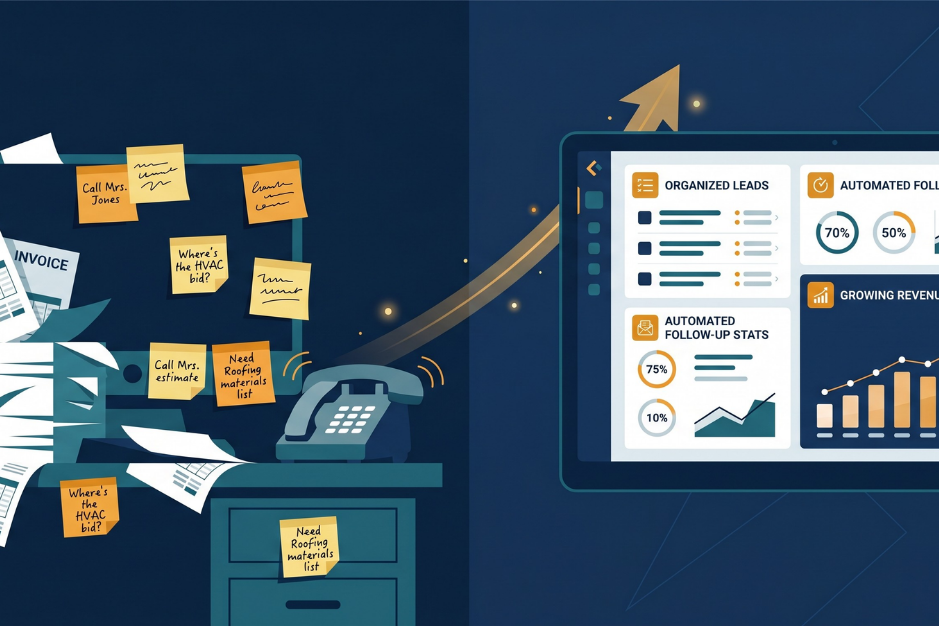

Speed to lead is the time between a new lead contacting your business and your first reply. If someone fills out your quote form at 6:10 and hears back at 6:11, your speed to lead is one minute. If they hear back the next morning, it’s fifteen hours.
The term gets used a lot in sales and marketing and rarely gets explained to the people running small businesses. Here is the plain version, and why the number matters.
Why the clock starts at the form
Someone who fills out your contact form or asks for a quote has already decided they have a problem and want help. They are comparing options right now.
The research on how fast that interest fades is old but consistent. A study published in Harvard Business Review found that companies contacting leads within an hour were nearly seven times more likely to have a meaningful conversation than companies that waited longer. A 2007 Lead Response Management study by Dr. James Oldroyd of MIT Sloan, run with InsideSales.com (a company that sells response software), put the window tighter: reaching a lead in five minutes instead of thirty made them about 21 times more likely to qualify.
Five minutes sounds extreme until you picture the person on the other end. They just hit submit, they’re still holding their phone, and they haven’t called anyone else yet. Two or three hours later, you’re no longer the first call they return. You’re competing with whoever got there before you.
What a slow reply costs
Say you get 40 leads a month and answer most of them within a few hours, or the next morning when they come in late. Some of those people will have picked someone else by the time you call. They weren’t uninterested; someone else answered first.
Multiply that by twelve months and by what an average customer is worth to you, and the total is usually more than owners expect. What It Costs to Stop Losing Leads to a Slow Reply walks through that math with your own numbers.
You also never see this loss. Those leads look like people who stopped responding, and the competitor who reached them first doesn’t show up anywhere in your records.
Why small businesses struggle with it
Large companies cover this with sales teams, round-the-clock shifts and CRM workflows. A small business has you. When a lead comes in at 6 p.m. on a Thursday, you’re finishing a job, dealing with a customer, or eating dinner with your family.
Leads arrive whenever they like, and your ability to answer has hours. A manual process will always have gaps, and those gaps are where the leads go.
How speed-to-lead automation works
An automated system sends the first reply the moment a lead comes in, at any hour. A good first reply confirms you got the request, says what happens next, asks a question or two that helps you qualify the lead, and can offer a link to book time on your calendar.
When you sit down to follow up, the lead has already heard from you and may already be on your calendar, so you pick up a conversation instead of starting one. You can watch a 60-second lead reply to see what that looks like, or read how we set up speed-to-lead automation.
Why it pays off
This kind of automation changes one thing, response time. Your leads, your marketing and your sales process stay the same, so you get more out of leads you already pay for instead of buying more of them.
Is it worth it for your business?
If leads reach you through a website, ads, referrals or anywhere online, and you don’t reply within minutes, it’s worth a serious look. If you get fewer than about ten leads a month and already answer them quickly, it probably isn’t.
The goal is simple: make sure the conversation with a person gets a chance to start.
Want to see what a speed-to-lead system could look like for your business?