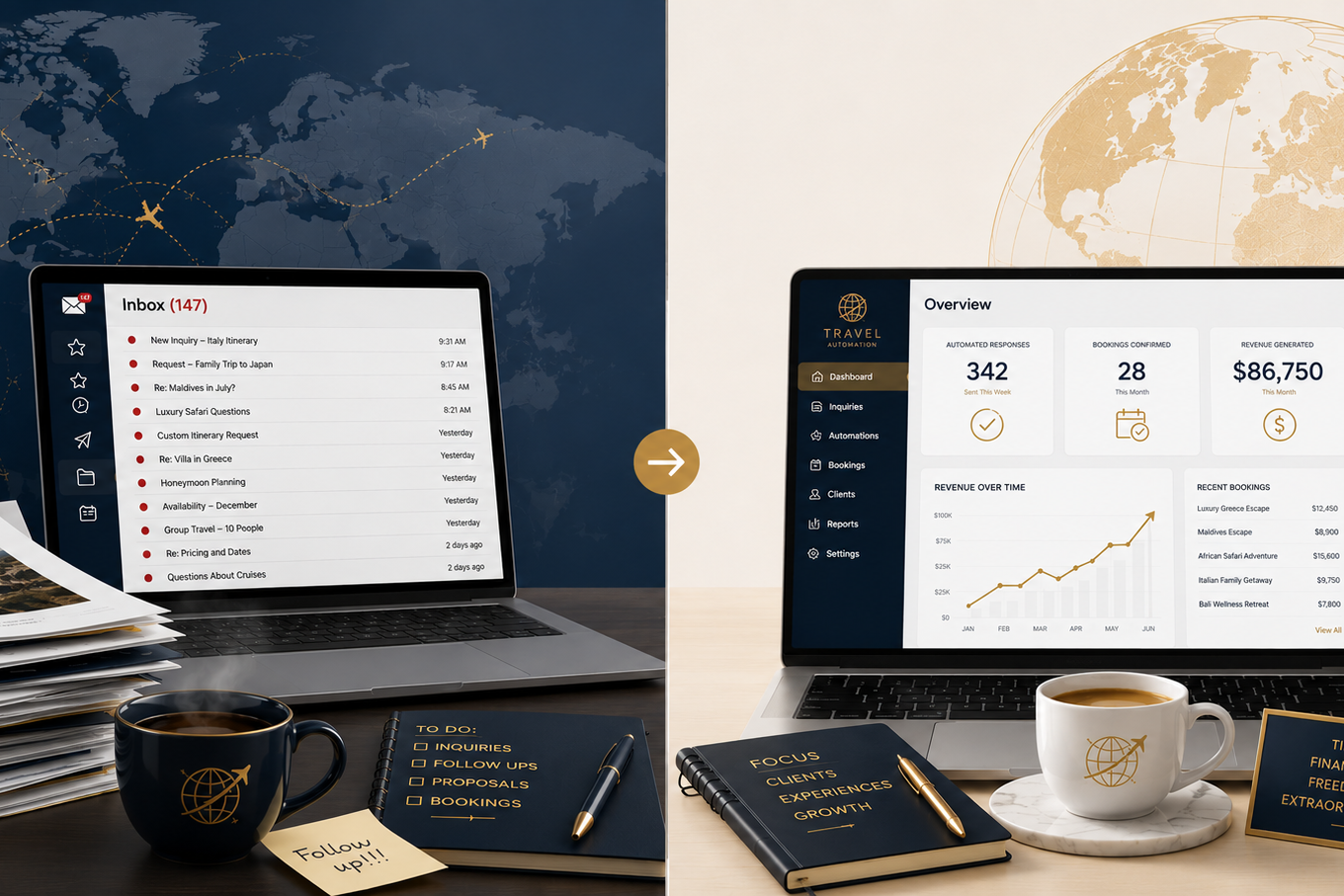

Most owners of service businesses know they should follow up with leads more than they do. They don’t, and the reason is usually hours in the day, not indifference. That gap between knowing and doing costs more than almost any other operational problem in the business.
Where the money goes
Say you get 50 new leads a month. Very few buy on the first contact; most need at least one more touch before they decide. If follow-up depends on someone remembering to do it, much of that pipeline is left to chance. Some leads will come back on their own. Most won’t.
Multiply the ones that don’t by twelve months and by what a client is worth to you over the relationship, and the number gets uncomfortable fast. You already paid to get those leads, so the gap is in follow-up, and follow-up is a matter of having a system.
What manual follow-up costs besides lost leads
Time is the second cost. Someone has to open the contact, write the email or make the call, log it and schedule the next touch. Across any real pipeline, that adds up to hours a week that don’t go into delivering the work.
Consistency is the third. Some leads get three follow-ups, some get one, and in a busy week some get none, so your cadence ends up depending on how swamped you are. The last is the mental load of tracking who needs to hear from you and when. Most owners know the nagging feeling that something is slipping, and usually something is.
What a good follow-up sequence does
Good follow-up shows up at the right moments with something useful to say. A sequence sends helpful information between touches (answers to common questions, relevant examples, reviews from past customers), re-engages leads who went quiet, and moves interested prospects toward a decision without anyone tracking and triggering each message by hand.
The businesses that do this well usually haven’t hired more people. They’ve handed the follow-up workflow to a system that runs the same way in a slow week and a busy one.
What to automate and what to keep personal
Automate the repetitive, time-sensitive touches: first replies, check-ins, reminders and re-engagement. Then when you show up in person, it’s at the moments that matter. A lead who has been through a good sequence and is ready to buy deserves your full attention. The system gets them to that point, and you close.
When manual follow-up stops working
Manual follow-up works fine at 10 leads a month with time to spare. Past that, it becomes one of the more expensive habits a service business can keep. If you’re spending hours chasing leads a system could handle, or losing leads because nobody follows up at all, the fix is follow-up automation that runs whether or not you have time that week.
If you want to see what an automated follow-up system could look like for your business, let’s talk.